This article explores the advantages of using metal buildings for warehouses, focusing on efficiency and space optimization. Warehouse metal buildings are transforming the logistics and supply chain industry by offering competitive benefits that traditional structures can’t match.
Why Choose Warehouse Metal Buildings?
Metal buildings for warehouses are chosen for durability, longevity, and sustainability. They withstand harsh weather, resist pests, fire, and water damage, and require minimal repairs, making them cost-effective.
Technological advancements have further extended their lifespan. Economically, metal structures have lower initial and labor costs compared to traditional materials. Their durability leads to reduced maintenance and insurance costs, enabling businesses to allocate resources effectively. Adopting metal buildings aligns with long-term financial planning, ensuring sustainable operations.
Metal buildings are cost-efficient and easy to maintain, avoiding risks like rotting, warping, or termite damage. Non-porous metals resist mold and mildew. Routine cleaning and quick modular repairs minimize downtime. This results in cost and time savings, enhancing warehouse operations. The resilience of metal structures also promotes operational consistency, even in challenging environments.
Pre-engineered metal buildings (PEMBs) cut construction time by 30-40% compared to concrete tilt or precast systems, thanks to off-site prefabrication and on-site assembly. This speed-to-market advantage boosts ROI by allowing businesses to start operations sooner and reduce labor expenses. Many metal buildings achieve payback periods of 6-8 years, outperforming traditional structures that take 10-15 years.
How Do Metal Buildings Maximize Space?
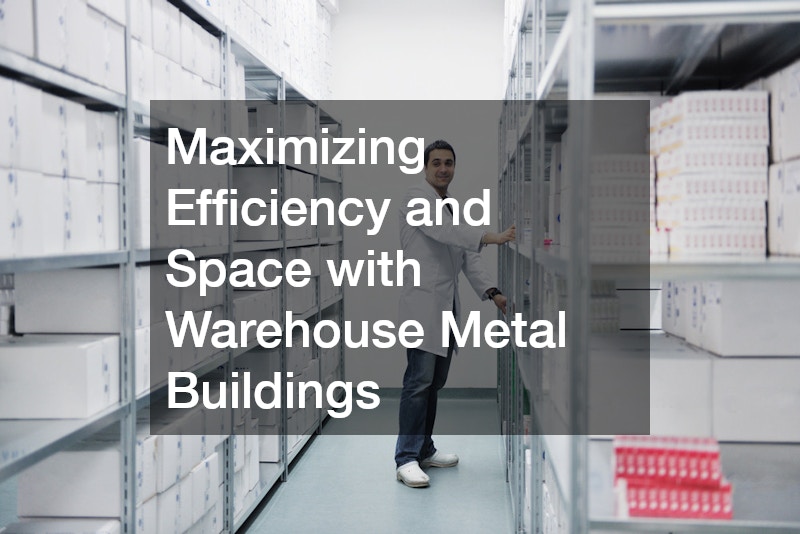
Metal buildings maximize space with clear-span structures, allowing customizable, open spaces for diverse warehouse operations. This flexibility supports reconfigurations for evolving needs, minimizing remodeling costs. Vertically, metal buildings allow multi-story and sophisticated racking systems, increasing inventory storage without extra real estate investment. Space optimization in metal buildings leads to improved logistics efficiency.
Strategic layout planning in metal buildings supports efficient workflow with modular partitions, enhancing space management. Technology integration like automated vehicles and smart shelving complements optimal layouts, adapting to growth and demand changes seamlessly. This technological synergy empowers businesses to stay ahead of industry trends.
Steel framing enables wide spans without interior columns, maximizing usable floor space for shelving, machinery, and vehicle access. Modular designs also allow easy additions like mezzanines or loading docks, supporting scalability without major disruptions.
What Are the Energy Efficiency Benefits?
Metal warehouse buildings offer energy efficiency through advanced insulation, maintaining consistent internal temperatures, lowering heating/cooling needs, and reducing utility bills and carbon footprint. Reflective roofs decrease the need for air conditioning, extending roof lifespan, and lowering energy costs. Energy-efficient designs also contribute to sustainability goals, meeting environmental standards.
Natural lighting, via large windows and skylights, reduces artificial lighting dependence, decreasing energy expenses and improving the work environment, enhancing productivity. Natural lighting also lowers cooling costs, promoting eco-friendly practices and saving resources. The eco-conscious design enhances the building’s sustainability rating, appealing to environmentally aware companies.
PEMBs with enhanced insulation can reduce operating energy by over 15% compared to conventional buildings, while cool metal roofs cut cooling costs by 7-15% annually. Properly insulated steel structures often achieve R-30+ roof and R-19+ wall values, outperforming wood in various climates when airtightness is optimized.
What Are the Customization Options Available?
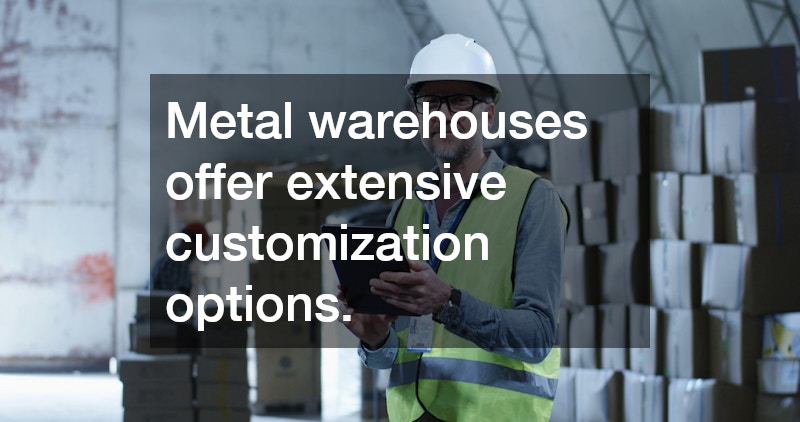
Metal warehouses offer extensive customization options. Exterior finishes can match brand identity, while architectural designs cater to specific operational needs, optimizing workflows. Color choices impact aesthetics and work environment, enhancing satisfaction and productivity, and reinforcing brand image. Customization ensures that metal buildings meet unique business requirements, contributing to operational success.
How Do Metal Buildings Support Scalability?
Metal buildings offer expandable designs for scalability, supporting business growth seamlessly. The modular nature allows cost-effective and efficient space additions. Flexibility in layout and function accommodates operational changes, ensuring competitiveness. Scalability ensures businesses can quickly adapt to market changes and expand operations without disruption.
Partitioning interiors for leasing adds scalability, generating revenue streams and offering flexibility for business strategies. Metal buildings represent valuable, versatile assets, adapting to fluctuating demands. Future-proofing with metal buildings ensures businesses remain agile and responsive in dynamic markets.
The U.S. pre-engineered metal building market, valued at 12.98 billion in 2024, is projected to reach27.10 billion by 2033, driven by demand for scalable warehouse solutions.
Metal warehouse buildings provide unmatched efficiency, space utilization, and scalability, combining durability, energy efficiency, and customization. They are ideal for resilient operations, supporting diverse industries and strategic growth objectives. Metal building warehouses are pivotal assets in logistics and inventory management. Investing in metal buildings contributes to a robust foundation for long-term business prosperity.